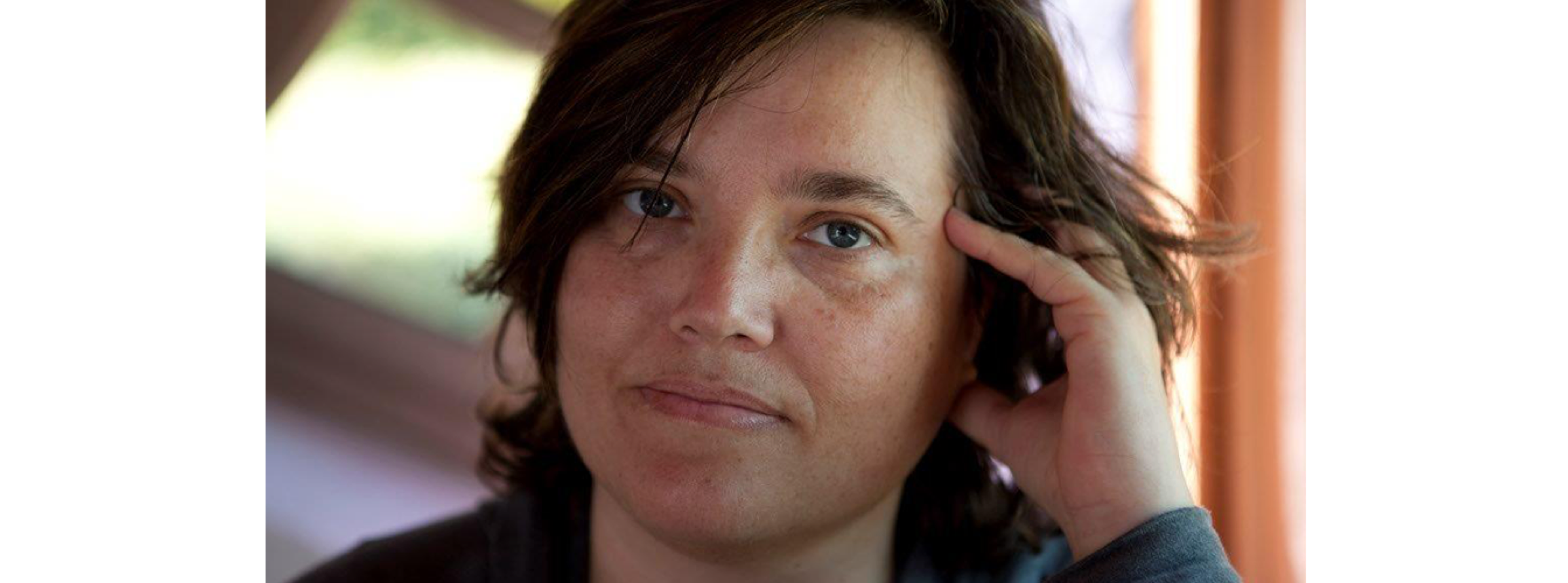
Interview mit Claudia Boysen – Drehbuchautorin und Regisseurin
Die Charaktere der Figuren Marie und Sarah sind sehr unterschiedlich. Ist es das, was die Anziehung der beiden ausmacht?
Ja, definitiv. Sarah sehnt sich nach dieser gewissen Stabilität, die Marie ihr bieten kann, sie fühlt sich von ihr geliebt und geschützt, sie ist wie ein Anker, der ihr die Sicherheit gibt, die sie in entscheidenden Stationen ihres Lebens nicht hatte und will das festhalten. Während Sarah für Marie wiederum Freiheit bedeutet – ihren Impulsen folgen, aus sich heraus gehen, lachen, tanzen, fühlen, Dinge machen, die sie sonst nicht macht. Und so inspirieren sie sich beide.
In einer Szene des Films nähert sich Marie gefährlich nahe dem Abgrund. Warum lassen Sie die Figur das machen?
Das ist für mich ein Bild für ihre inneren Abgründe. Diese physische Annäherung an den inneren Abgrund ist mir selbst auch bekannt. Das passiert nicht auf der rationalen Ebene – das würde nicht zur Figur der Marie passen – sondern sie testet in einem emotionalen Ausnahmezustand diese Grenze aus und das wird damit symbolisch.
Welche der beiden Figuren ist die Hauptfigur? Oder sind es beide?Strukturell gesehen ist sicherlich Marie die Hauptfigur, weil die Handlung durch ihre Augen erzählt wird und der Zuschauer ihre Perspektive einnimmt. Mich persönlich reizen die Figuren, die nicht so schillernd sind, immer etwas mehr. Sarah ist insofern die Hauptfigur, als dass sie den Fokus von Marie darstellt, oder ihres Interesses und ihrer Welt, zumindest eine Zeit lang. In dem Sinne wird sie zum Gegenstand, in filmstruktureller Hinsicht, zur Hauptfigur.
Hat es dem Film geholfen, dass er auf den Kanarischen Inseln und nicht irgendwo an der Nordsee spielt?
Ja, natürlich, allein der Umstand, dass es immer warm ist, ist hilfreich, weil dadurch das Körpergefühl verändert wird. Wir wissen ja mittlerweile, dass Sonneneinstrahlung auch die Libido anheizt, was sicherlich zu der erotischen Spannung am Set beigetragen hat, es macht einfach offener. Für Felicia war es ja der erste Film, das andere Klima hat ihr glaube ich geholfen, sich nicht wieder in ihr altes Selbst zurückzuziehen. Wie im Urlaub, wenn man in eine andere Rolle schlüpfen kann. Es war ein abgeschlossenes Universum, weit weg, auf einer Insel, wo sich alle auf dieses Experiment einlassen konnten.
Gibt es eine Szene, die besonders schwer zu realisieren war?
Die Nachtszene auf dem Campingplatz am Berg war aufgrund der Dunkelheit etwas schwierig umzusetzen. Wir hatten keine Möglichkeit, irgendwelche Scheinwerfer aufzustellen, weil es dort oben keine Stromquellen gab. Wir haben mit vergleichsweise kleinen Lampen versucht, die nächtliche Umgebung auszuleuchten, oder zumindest so weit zu erhellen, dass wir etwas sehen konnten. Außerdem haben wir auf La Palma öfter in größeren Menschenmengen gedreht, was auch nicht einfach ist. Damit hatten wir allerdings Glück, die Palmeros waren sehr entspannt und haben sich auf dem Fest nicht von uns stören lassen, nachdem wir ihre Erlaubnis eingeholt hatten. Das war natürlich grandios, dadurch entsteht eine sehr authentische Atmosphäre. Es hat immer Vorzüge und Nachteile Filme so zu machen, so geht es schnell und birgt sehr viele Überraschungen; man ist ganz glücklich, wenn alles geklappt hat, während der kreative Partner Zufall mit dabei war und so schöne Sachen entstehen können.
In dem Film gibt es eine Frühstücksszene, die sehr einladend wirkt, man möchte am liebsten dabei sein …
Oh ja, das Essen auf La Palma war sehr gut, frische Produkte, Tomaten und Melonen, Avocados, die gerade vom Baum gefallen sind, frisch gereift von der Sonne. Ich glaube jeder, der mal im Süden war, dem läuft das Wasser im Mund zusammen, das ist nicht vergleichbar mit den Sachen, die man in Deutschland bekommt. Ich esse gerne, vor allem miteinander essen ist etwas Schönes. Sarah will Marie eine Freude machen und bereitet ihr ein schönes Frühstück, ich finde, Essen ist etwas unglaublich Sinnliches und verbindet, das war für mich ein Aspekt dieser Freundschaft. In diesem Film hat es zwar einen leicht manipulativen Faktor, aber es hat auch etwas Unschuldiges. Das liegt in der Figur der Sarah, das Sinnliche und das Kalkulierte. Das macht die Spannung und das Interessante an ihr aus.
Was haben Sie durch „Ungesagt“ dazugelernt?
Vor allem habe ich einige Dinge über mich gelernt. Die Machart des Films war für mich etwas ungewöhnlich, da ich das Drehbuch innerhalb von vier Wochen geschrieben habe, danach waren wir auch schon mitten in der Produktion. Nach dem Casten der Schauspieler sind wir direkt nach La Palma zu den Proben geflogen. So wurde der ganze Bogen des Films nicht noch mal infrage gestellt und der Prozess der Reflexion zum Schnittplatz verlegt. Die Fülle des Materials, das wir hatten, hat mir noch mal Möglichkeiten eröffnet und an diesem Punkt fing der Lernprozess für mich an. Da habe ich angefangen zu hinterfragen, warum ich diesen Film gemacht habe und warum ich ihn so gemacht habe, wie er nun ist. Da konnte ich einiges über meine Sehnsüchte, Ängste und Grenzen lernen, das war sehr spannend.
Da steckt also auch Persönliches und Intimes von Ihnen in Ungesagt?
Ja, auf jeden Fall. Vordergründiges, wie zum Beispiel, dass ich in dem Alter der Darstellerinnen auch mal Erfahrungen mit einer Frau gemacht habe. Wobei ich gemerkt habe, dass das nichts ist, was mich weiter interessiert. Oder, dass ich diese besondere Intimität, die Frauen miteinander haben und teilen können, ohne sexuell zu sein, sehr schätze. Aber das, was es wirklich in der Tiefe mit mir zu tun hat, die Unsicherheiten und Wünsche, kristallisierten sich während des Prozesses, der ja in meinem Fall sehr frei entstehen konnte, heraus. Wäre der Film von vielen Menschen, die mitentscheiden wollen, geformt worden, hätte ich mich darin auch weniger wiederfinden können.
Interview with Claudia Boysen – Screenwriter and Director
The characters Marie and Sarah are very different. Is that what creates the attraction between them?
Yes, definitely. Sarah longs for the kind of stability that Marie can offer her. She feels loved and protected by her. Marie is like an anchor, giving Sarah the security she lacked at crucial stages of her life, and Sarah wants to hold on to that. Sarah, in turn, represents freedom for Marie — following her impulses, coming out of herself, laughing, dancing, feeling, doing things she otherwise wouldn’t do. And in that way, they both inspire each other.
In one scene in the film, Marie comes dangerously close to the edge of a cliff. Why do you have the character do that?
For me, it is an image of her inner abysses. I’m familiar myself with this physical approach toward an inner abyss. It doesn’t happen on a rational level — that wouldn’t fit Marie’s character — but in an emotionally extreme state, she tests that boundary, and that makes it symbolic.
Which of the two characters is the main character? Or are they both?
Structurally speaking, Marie is certainly the main character, because the story is told through her eyes and the audience takes on her perspective. Personally, though, I’m always a little more drawn to characters who aren’t quite as dazzling. Sarah is the main character in the sense that she is the focus of Marie’s attention — or of her interest and her world, at least for a while. In that sense, she becomes the object, and in terms of the film’s structure, the main character.
Did it help the film that it is set on the Canary Islands rather than somewhere on the North Sea?
Yes, of course. The simple fact that it is always warm is helpful, because it changes your physical awareness. We now know that sunlight also stimulates the libido, which certainly contributed to the erotic tension on set. It simply makes people more open. For Felicia, it was her first film, and I think the different climate helped her not to retreat back into her old self. It’s like being on vacation, when you can slip into a different role. It was a self-contained universe, far away, on an island, where everyone was able to commit to this experiment.
Was there a scene that was especially difficult to realize?
The night scene at the campsite in the mountains was somewhat difficult to pull off because of the darkness. We had no way of setting up any large lights, because there were no power sources up there. We tried to light the nighttime surroundings with comparatively small lamps — or at least brighten them enough so that we could see something. We also often shot in larger crowds on La Palma, which is not easy either. But we were lucky there: the people of La Palma were very relaxed and, after we had asked for their permission, they didn’t let us disturb their festival. That was fantastic, of course, because it creates a very authentic atmosphere. Making films this way always has advantages and disadvantages. It moves quickly and brings many surprises. You feel very happy when everything works out, while chance, as a creative partner, is part of the process and beautiful things can emerge from it.
There is a breakfast scene in the film that feels very inviting — you almost wish you could be there yourself …
Oh yes, the food on La Palma was very good: fresh produce, tomatoes and melons, avocados that had just fallen from the tree, freshly ripened by the sun. I think anyone who has ever been to the South knows how mouthwatering that is. It’s simply not comparable to what you get in Germany. I like eating, and especially eating together is something wonderful. Sarah wants to make Marie happy and prepares a beautiful breakfast for her. I think food is something incredibly sensual, and it connects people. For me, that was one aspect of this friendship. In this film, it does have a slightly manipulative element, but it also has something innocent about it. That lies within Sarah’s character: the sensual and the calculated. That is what creates the tension and makes her interesting.
What did you learn from UNSAID?
Above all, I learned several things about myself. The way the film was made was somewhat unusual for me, because I wrote the screenplay within four weeks, and after that we were already right in the middle of production. After casting the actors, we flew directly to La Palma for rehearsals. So the overall arc of the film was not questioned again; instead, the process of reflection was shifted to the editing room. The abundance of material we had opened up new possibilities for me, and that was the point where the learning process began. That was when I started questioning why I had made this film, and why I had made it the way it turned out. I was able to learn quite a lot about my longings, fears, and boundaries, and that was very exciting.
So there is also something personal and intimate of yours in UNSAID?
Yes, absolutely. On the surface, there are things such as the fact that, when I was the actresses’ age, I also had experiences with a woman. Although I realized that it was not something I wanted to pursue further. Or the fact that I very much value that special intimacy women can have and share with each other without it being sexual. But the things that truly have to do with me on a deeper level — the insecurities and desires — crystallized during the process, which, in my case, was able to develop very freely. If the film had been shaped by many people wanting to have a say in it, I would have been able to find myself in it much less.

Disclaimer / Datenschutz - Impressum - Copyright © 2015 Ungesagt der Film